Neighbourhood Health for Creative Health
Neighbourhood Health Framework: what you need to know
Published on 17 March 2026, the Neighbourhood Health Framework sets out the government’s plan to establish a neighbourhood health service across England.
It is intended to support integrated care boards (ICBs) and local authorities, – including health and wellbeing boards (HWBs), providers, voluntary, community and social enterprise (VCSE) partners and wider system partners – to deliver more accessible, integrated and preventative care as part of the 10-year health plan.
Building on the current development of neighbourhood working, ICBs will be required over the next three years to deliver a minimum set of interventions across three reform priorities:
- Improving services for people requiring routine healthcare
- Strengthening proactive care
- Providing better alternatives to hospital-based care.
The Department of Health and Social Care (DHSC) and NHS England (NHSE) will define the baseline requirements for new arrangements, with implementation taking place in two parallel stages:
- Stage 1: Immediate changes in the 2026/27 financial year.
- Stage 2: Longer term reform from April 2027 to March 2029.
The framework offers clarity following the 10-year health plan, with flexibility built into the approach, emphasising a permissive, less prescriptive model, which provides space for local innovation in design and delivery.
The framework outlines five main aims of neighbourhood health:
- Improving people’s health and care outcomes, reduce health inequalities and help them stay well at home.
- Organising services around the person, with more convenient, personalised and joined-up care.
- Reduce avoidable demand on acute services – including hospitals and care homes.
- Cut waste and duplication – integrating services across health, local government and wider partners.
- Helping the NHS deliver against core targets.
The framework outlines national minimum goals and objectives, which are complemented by locally developed aims and outcomes, specific to local communities. These will be defined locally through neighbourhood health plans, designed under the collective leadership of the ICB and the health and wellbeing board (HWB).
This model of healthcare delivery provides a direct opportunity for those currently working with communities, to establish local partnerships, as those closest to communities are best placed to shape the future model of care.
With that focus in mind, my role will establish engagement with healthcare providers to provide a voice for the Creative Health sector within strategic meetings and ensure that local creative health interventions are on the Neighbourhood Health Map.
How this translates into longer term funding and systems change is yet to be discovered. However, it is the first step to a more integrated delivery of healthcare and one which provides an opportunity for the Creative Health sector to be seen as equal delivery partners, rather than the poor relation.
Click to read more about the Neighbourhood Health Framework including National NHS goals, objectives and metrics.
For ways to add your voice to the Creative Health eco-system, join the new Creative Health Interest Meetings (CHIMe) and/or sign up to the Norfolk & Suffolk Creative Health Mailing List to be kept informed of developments happening across the regions.
Similar stories
 Blog posts
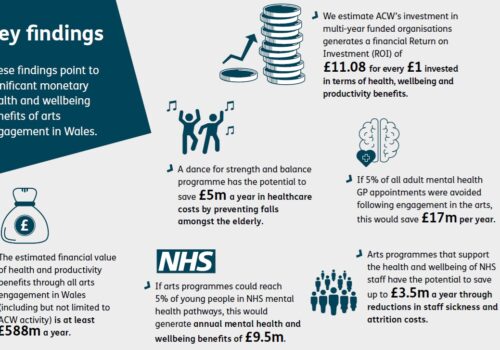
TL:DR A Synopsis of the recent Building the Economic Case for Creative Health Webinar
A synopsis of the recent Building the Economic Case for Creative Health Mobilising Community Assets (MCA) to Tackle Health Inequalities Webinar Hosted on Friday 27 March 2026.
Find out more Blog posts
Creative Health Research Round Up 2025
The Creative Health Research Round-Up 2025 has been produced by the National Centre for Creative Health (NCCH) in partnership with the Royal Society for Public Health (RSPH).
Find out more